

The Launcher is one of the most important parts of the smart watch experience—the starting point for nearly everything people do. With the new Launcher in Zepp OS, we wanted to put what matters most within easier reach, making everyday actions feel faster, smoother, and more natural.
The updated Launcher brings a refreshed interface, clearer visual hierarchy, smoother transitions, and more responsive feedback. Key areas are now organized more directly around the watch face, giving workouts, apps, notifications, controls, and Shortcut Cards a clearer place in the experience. Physical buttons also play a more useful role, helping users reach important features more reliably when touch is not the most convenient option.
But we also know that changing the Launcher is no small thing.
For many users, the previous Launcher had become familiar through daily use. Over time, its gestures and paths became muscle memory. Users knew where to swipe, where to look, and how to reach the information they checked most often. When an interaction becomes that familiar, changing it naturally takes time to adjust to.
That is why we want to explain not only what changed, but why we redesigned the Launcher around what matters most.
Over time, different Amazfit watch lines developed different Launcher structures based on their product positioning, usage scenarios, and user needs. Those differences made sense at the time. But as Zepp OS expanded to more devices and capabilities, the gaps between these experiences became more noticeable. We saw the need to bring the core navigation model back into closer alignment before that fragmentation grew further.
The new Launcher is built around the watch face as the center of the experience. From the watch face, each direction now has a clearer role:
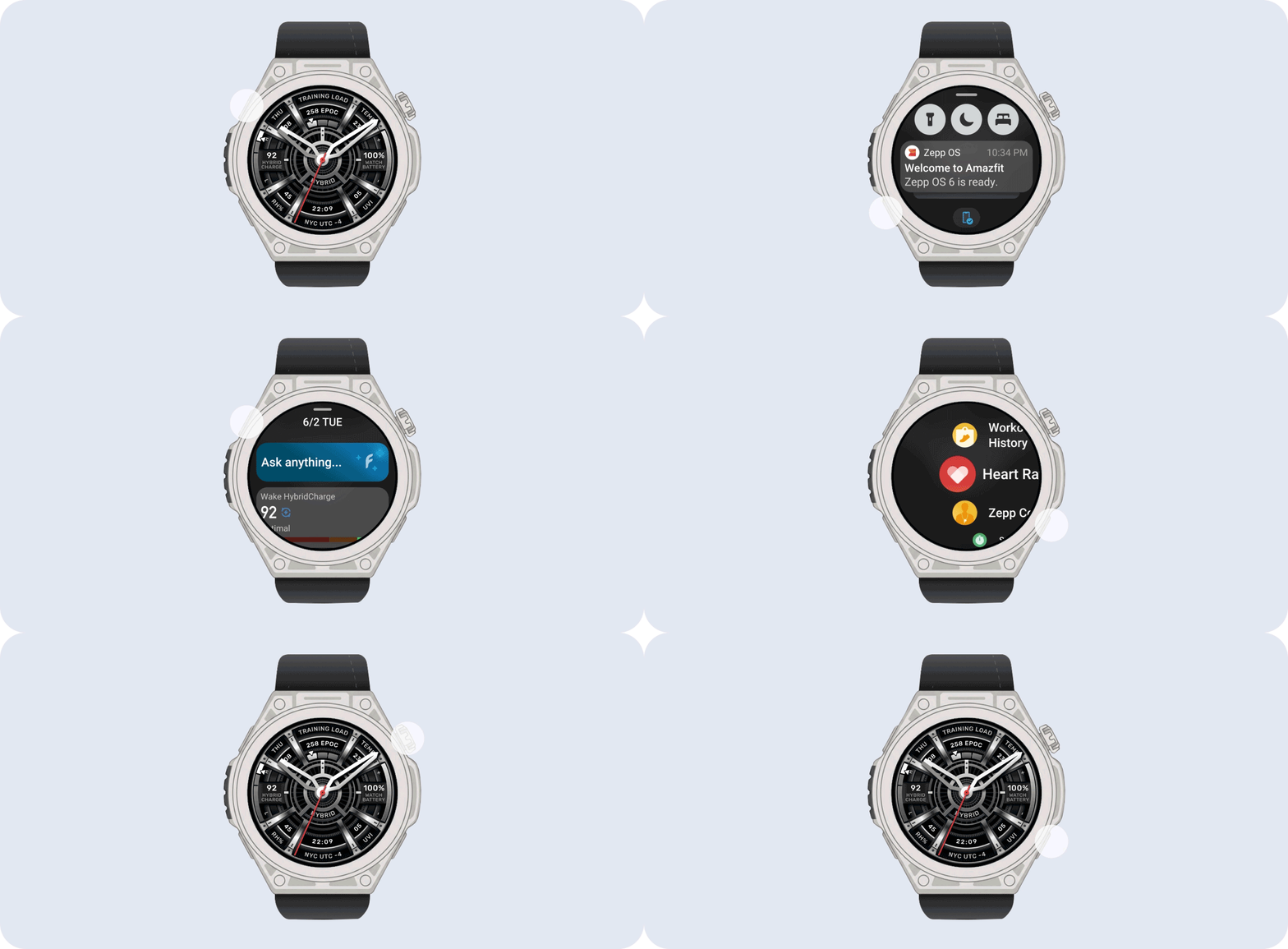
Swipe right to access the workout list.
Swipe left to open the app list.
Swipe down to reach notifications and controls.
Swipe up to view Shortcut Cards.
This structure helps users build a more stable mental model. Whether they are moving between Amazfit watches or using Zepp OS for the first time, the main areas of the system become easier to understand and remember.
The goal is not to make every watch feel exactly the same. Different product lines will continue to serve different needs. But the foundation of the system should feel familiar, predictable, and coherent across devices.
Amazfit watches serve many roles: daily smartwatch, health companion, and quick way to check notifications and information. These everyday experiences remain essential. At the same time, workouts and outdoor activities place higher demands on interaction.
Making key functions easier to reach with buttons
When users are running, training, hiking, cycling, or moving outdoors, every extra step matters. Touch interaction is useful, but it is not always ideal. Sweaty hands, rain, gloves, motion, or simply the need to stay focused can make touch less reliable. In these moments, a watch should feel direct and dependable.
That is why the new Launcher gives physical buttons a more central role. Key features can be reached more quickly, and the watch remains easier to operate when touch is inconvenient. This keeps important functions within reach during workouts without making everyday use more complicated.
Placing important information in vertical space
Notifications and controls now live above the watch face, where a swipe down brings important messages and quick settings into view. Shortcut Cards live below the watch face, where a swipe up gives users access to glanceable information and common actions.
This vertical structure is better suited to reading, scanning, and continuous browsing. Notifications, controls, and cards often contain lists, status information, or lightweight actions. Organizing them vertically makes these experiences easier to follow on a small screen.
So the new Launcher is not only more focused on workout scenarios. It also makes everyday interactions more organized, helping users check information, adjust settings, and move between key areas through shorter paths and clearer directions.
As we reorganized the Launcher, we also took a closer look at horizontal widgets.
In many everyday use cases, horizontal widgets and Shortcut Cards served very similar purposes. Both provided quick information, glanceable content, lightweight actions, and fast access to frequently used functions.
In other words, there was a very high degree of overlap.
Keeping both systems side by side would not necessarily make the experience stronger. Instead, it could make the Launcher feel more redundant and make it harder for either experience to become truly powerful. When two surfaces are trying to do nearly the same job, users' attention is divided, and product improvements are split across two similar systems.
With the new Launcher, we chose a clearer direction.
Rather than maintaining two separate quick-access surfaces, we are reorganizing this type of information and interaction around Shortcut Cards in the vertical space. Shortcut Cards will become a stronger, more scalable quick-access layer in Zepp OS, with more room to grow in usefulness, clarity, and capability over time.
This does not mean quick information is becoming less important. It means we are giving it a clearer home. By reducing duplication, the Launcher becomes more focused. Each part of the system has a more distinct role, and future improvements can be built on a stronger foundation.
The new Launcher is not just a new layout. It is a foundation for where Zepp OS is going.
It gives Amazfit watches a more consistent navigation model across product lines. It brings high-frequency information and controls closer to the watch face. It makes key features easier to reach during workouts. It reduces overlapping surfaces. And it gives Shortcut Cards a clearer role as the main quick-access experience moving forward.
We understand that this transition may take time, especially for users who had built habits around a previous Launcher structure. Familiar interactions matter, and changing them should always have a clear purpose.
Our purpose is to make the watch experience more coherent, more reliable, and easier to build on in the future.
We will continue improving guidance, discoverability, and the capabilities of Shortcut Cards, so the new Launcher becomes easier to understand and more useful over time.
The result is a Launcher that feels cleaner today and gives Zepp OS a stronger foundation for tomorrow: one that keeps what matters most within reach, helps users stay focused when it matters, and creates a more consistent experience across Amazfit watches.

